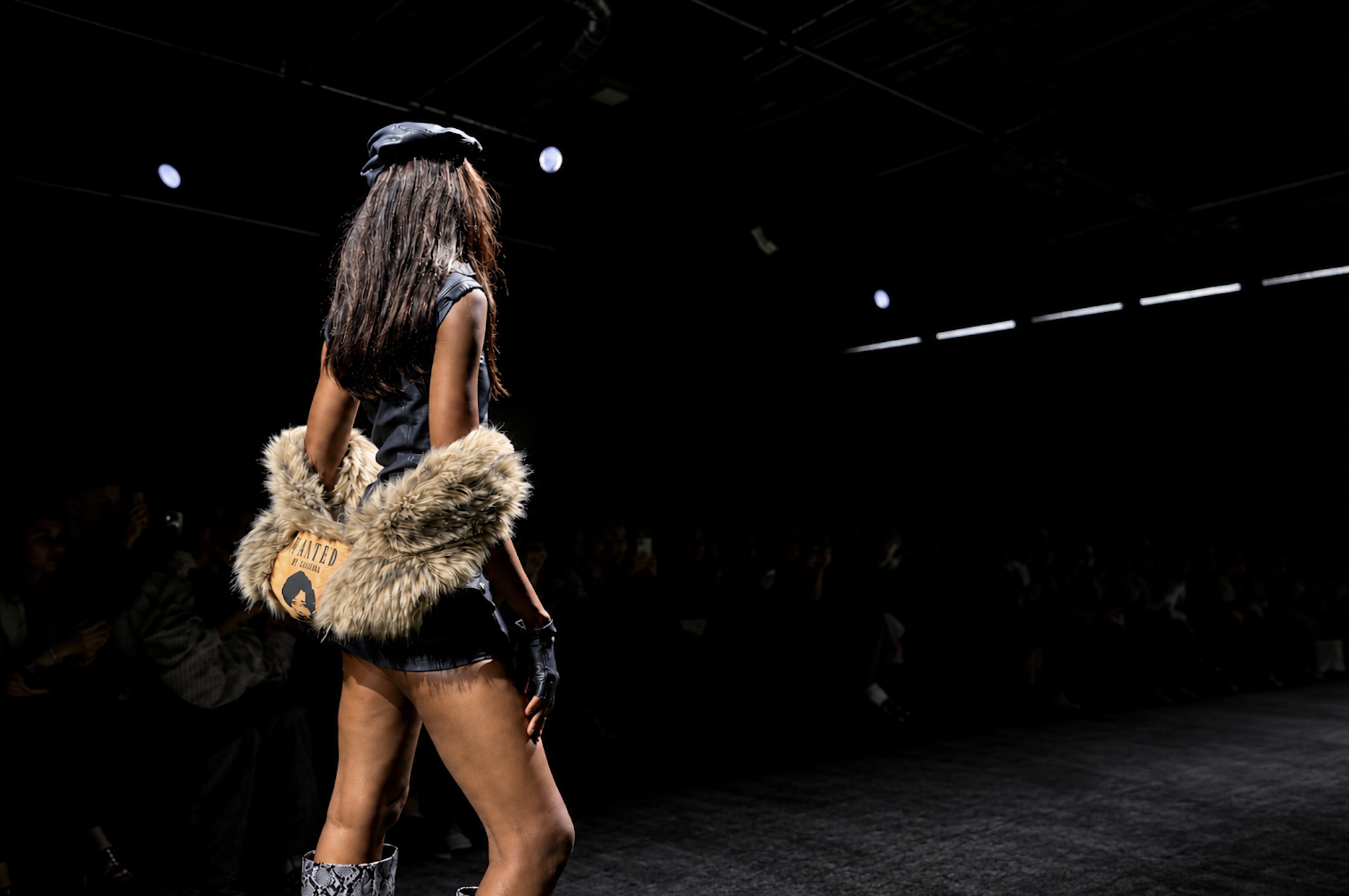
Getting dressed in the morning is rarely as simple as the mundane ritual of everyday life suggests. We pick a top, a pair of bottoms, and for those of us with a sense of coordination, maybe shoes that match. Every item we pick somehow says something fundamental, regardless of how simplistic the choice may seem. Even the people who deliberately distance themselves from the so-called “shallow” and “superficial” fashion industry are intentionally making a clothing choice that exudes a part of their identity. In a way, everything we put on our body represents something borrowed: borrowed confidence, borrowed indifference, borrowed composure. At the end of it, you could have an entirely constructed identity that represents the person you want to be perceived as, effectively creating a temporary self. We may dress for a position we have not earned, confidence we do not feel, or a life that has not yet come into fruition.
Consider this: a young woman secures an invitation to a fashion week event. She knows perfectly well that she is merely a student with a borrowed invitation and not a clue where to stand, but the clothes she picked out earlier that day have made a completely different introduction on her behalf. She is offered a conversation, a certain amount of respect and recognition that she would not have received in yesterday’s clothes. The woman is imprinting on a stranger who is responding to a persona she deliberately crafted to warrant that reaction, and suddenly, they go hand in hand to make that impression feel truthful for both parties.
You may consider this dishonest and deceiving, and in some ways, you aren’t entirely wrong. Frankly, the woman is putting on a show; her clothes offer evidence of a claim she has not yet proven. However, it is precisely those mundane clothing decisions that may eventually convert her performance into fact. They may not give her a job, a title, knowledge, or relationships, but they give her something much more malleable: opportunity. And suddenly, you have an opening that you can utilize.
The fashion industry understands perception better than any industry in the world. It is the only sector in the world where perception and chance coincide with something as simple as deciding what to put on your body just hours prior. A particular garment can suggest money and status you do not have, speaking of an obscure designer can suggest knowledge and experience that you don’t embody, and acting as though you don’t particularly care what you’re wearing can suggest privilege, as if you’ve somehow transcended the human need to impress.
There is also something rather uncomfortable hiding behind this. The fashion industry impacts not only those seeking entrance into the gilded, glamorous world of fashion, but also those pursuing greatness and success in seemingly entirely unrelated sectors. Picture two people seeking the same job in accounting. One applicant has considerable knowledge in the business but has fallen on hard times. Their clothes show wear, and their situation has left them with little money to replace them. The other applicant knows far less about the business but is dressed exactly like the person the employer expects to hire. Who has to spend the first ten minutes of their interview proving that they belong, and who can use those ten minutes to display and showcase real skills? The interview has barely started, and one person already faces the considerable task of overcoming the impression that they are not competent.
This phenomenon isn’t exclusive to a competitive position and extends to greater revelations surrounding human nature. The World Bank assessed 190 global economies and found that women have, on average, only 64% of the legal protections afforded to men, and they occupy only 3 out of 10 management positions. Black and/or African American applicants receive 32% fewer positive callbacks than corresponding majority groups. This then forces us to consider how the people occupying less financially lucrative positions have less financial ability to construct the “temporary self” necessary to increase their chances of beating someone who may be less qualified.
That is how an impression can create a material advantage: we look at a stranger, construct an unverifiable history for them, and behave as though our perception is fact, effectively helping them materialize our perception into reality, whether good or bad. We offer one person more attention, greater opportunity, and behave as though it is entirely warranted based solely on how they dress. Later, when that person utilizes that opportunity to construct considerable success, our initial judgement is proven accurate.
Through this lens, perhaps it is reasonable to consider the construction of the temporary self not only as an endeavor pursued to impress the average person we encounter, but as a way to rewrite society’s preconceived notions about us. It is not merely about changing the person we become when we put on the clothes, but about forcing the person perceiving us to become willing to see beyond their judgement.
This should make us far less certain of our own eyes. When someone looks as though they belong, are we reacting to demonstrated ability or the image of ability, and which one truly matters in the end?
Leave a Reply