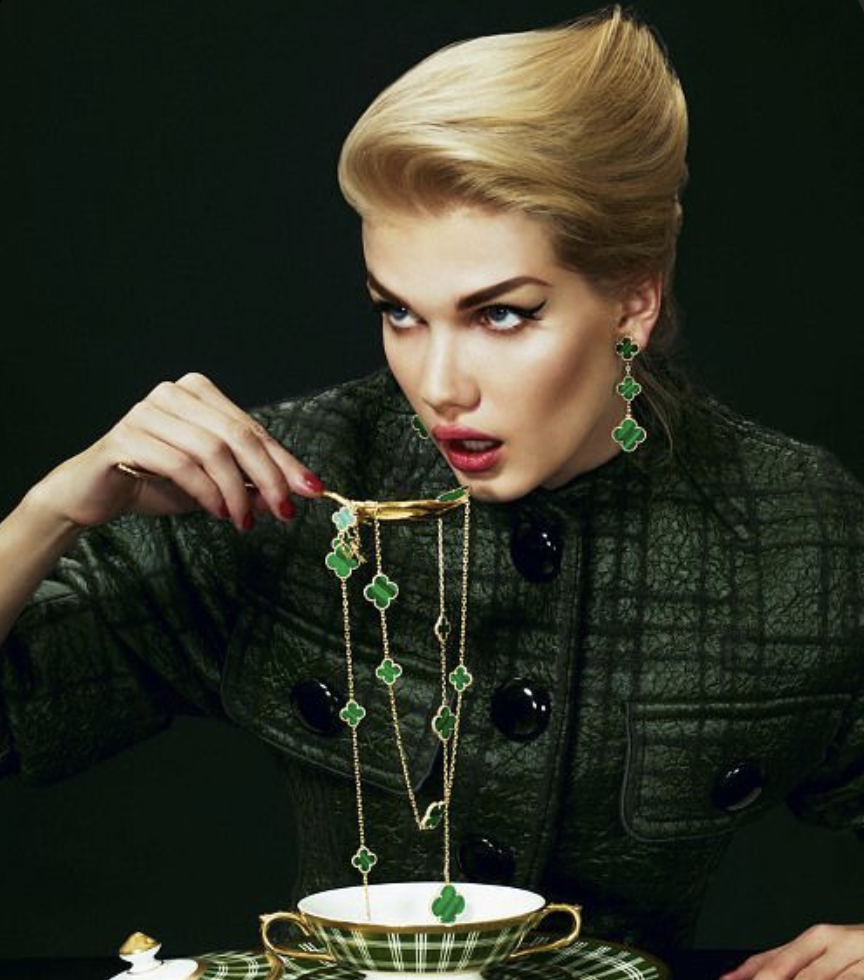
Humans derive great pleasure through possessions. We like to believe that our tastes and aspirations exist independently of public opinion, that we buy things simply because we appreciate them, work hard for them, and deserve them. We look at our wardrobes and think that they hold expressions of our individuality, rather than function as instruments of social comparison. While there is certainly truth to that, I think we are rather dishonest about how much we enjoy having things that other people do not.
Fashion is public communication: a visual language that is designed to translate something inherently private into a form of scalable, social power. When we possess something, three distinct desires become activated simultaneously:
- The desire to possess
- The desire to be admired
- The desire to be envied
Society readily forgives the first two. We are taught that envy is an ugly emotion, something to overcome. Acting on envy is often condemned; it makes you a bad friend, someone others rarely want to be around. And yet, humans spend considerable effort constructing lives, appearances, and identities that other people might envy. We condemn an emotion that exists within others, while quietly taking pleasure in being the object of it—a contradiction that is, while peculiar, incredibly revealing of just how selective our moral judgments become when our own egos benefit.
This begs the question: what exactly makes being envied so satisfying? I would argue that it actually has very little to do with possession, and everything to do with what another person’s desire tells us about where we stand within a specific social hierarchy. Envy tells us that we possess something that someone else lacks, and it simultaneously introduces an element of superiority, placing us above the other person. In this sense, our satisfaction no longer comes solely from what we have, but from the vertical distance between us and those who don’t have it. For a species that is incredibly preoccupied with social comparison and hierarchy—an instinct that has been ingrained in us since the beginning of human nature as a form of survival—that exact distance is intoxicating.
Interestingly enough, the desire to provoke envy is rarely something that we consciously identify with. Few people would openly sit and tell you that they enjoy making others feel inferior, and perhaps they are, in part, being honest, as I doubt most people enjoy overtly making someone feel less than. However, a lot of the time, envy is provoked subtly through perfectly socially acceptable explanations: good taste, ambition, the fruits of labor, etc. In that sense, other people wanting what we have is simply an unexpected consequence.
Nevertheless, I ask you to consider what provoking envy—and the desire derived from it—reveals about you. It is, inherently, a psychological shortcut to significance.
Being envied promises something instantaneous; it tricks you into mistaking awe or silent resentment for genuine respect and value. When in truth, forcing someone to look upward merely delivers a temporary, fleeting reprieve to your own fragile ego.
Before you go and say, “I definitely don’t do that,” examine your own desires. How many of them exist because others can witness you possessing them? When you construct an outfit or buy a new pair of shoes, how much of it is influenced by the fact that other people will witness it? Even the desire to be “niche,” which is incredibly common within creative fields, is often another manifestation of the desire to feel superior through distinction. Knowing a designer nobody else knows or having a hobby others aren’t aware is possible creates the same sense of possessing something somebody else lacks. Like envy, it creates distinction, and ironically, the desire to be niche is paradoxically dependent on other people’s recognition. You want to be different from everyone else, but everyone must also recognize the difference. Otherwise, what social value does your exclusivity even hold?
I would say that it is precisely here where the greatest irony lies. In the human pursuit of distinction, we simultaneously become dependent on the recognition of the very people we wish to distinguish ourselves from. Your superiority will never belong to you if it relies on another person’s perceived inferiority. After all, the satisfaction derived from being envied is entirely conditional. It requires an audience and someone insecure enough to acknowledge that you possess something they lack and have it alter their behavior. Remove that audience, and your superiority vanishes along with it.
Furthermore, there is another consequence that comes along with this pursuit. Envy is a rather dangerous emotion to provoke. To be the object of someone’s envy means to ultimately become the object of someone’s resentment, and the same person admiring your position could derive great satisfaction from watching you lose it. In that sense, it would serve us well to remember that jealousy is a green-eyed monster in both directions: those who experience it are consumed by what they lack, while those who seek to provoke it paint an unnecessary target on their own backs.
The Swiss psychiatrist Carl Jung introduced us to the concept of the shadow. The shadow applies to aspects of ourselves that we repress, reject, and refuse to acknowledge. We all have a preferred image of ourselves, and oftentimes, our shadow traits contradict our own self-belief. According to Jung, refusing to acknowledge these characteristics does not make them disappear, and the less conscious we are of our own motivations, the more likely we are to have them govern us. In order to truly live life according to our own terms, we must recognize and integrate even the parts of ourselves we don’t particularly like.
The fashion industry has made an extraordinary business out of the human desire for distinction. It doesn’t simply sell us clothes, but the possibility of being someone worth looking at. The industry is kept alive through fantasy, and luxury fashion houses have long understood that the value of an object in a superficial society is rarely craftsmanship, but what it communicates about the person wearing it.
I’m the last person to tell you that there is something wrong with wanting beautiful things, but I think we all ought to ask ourselves not whether we enjoy being envied, but whether our desires hold any weight if no one envies us for what we have. After all, what is the point of possessing everything you want if your satisfaction depends on somebody else wanting it too?
Leave a Reply