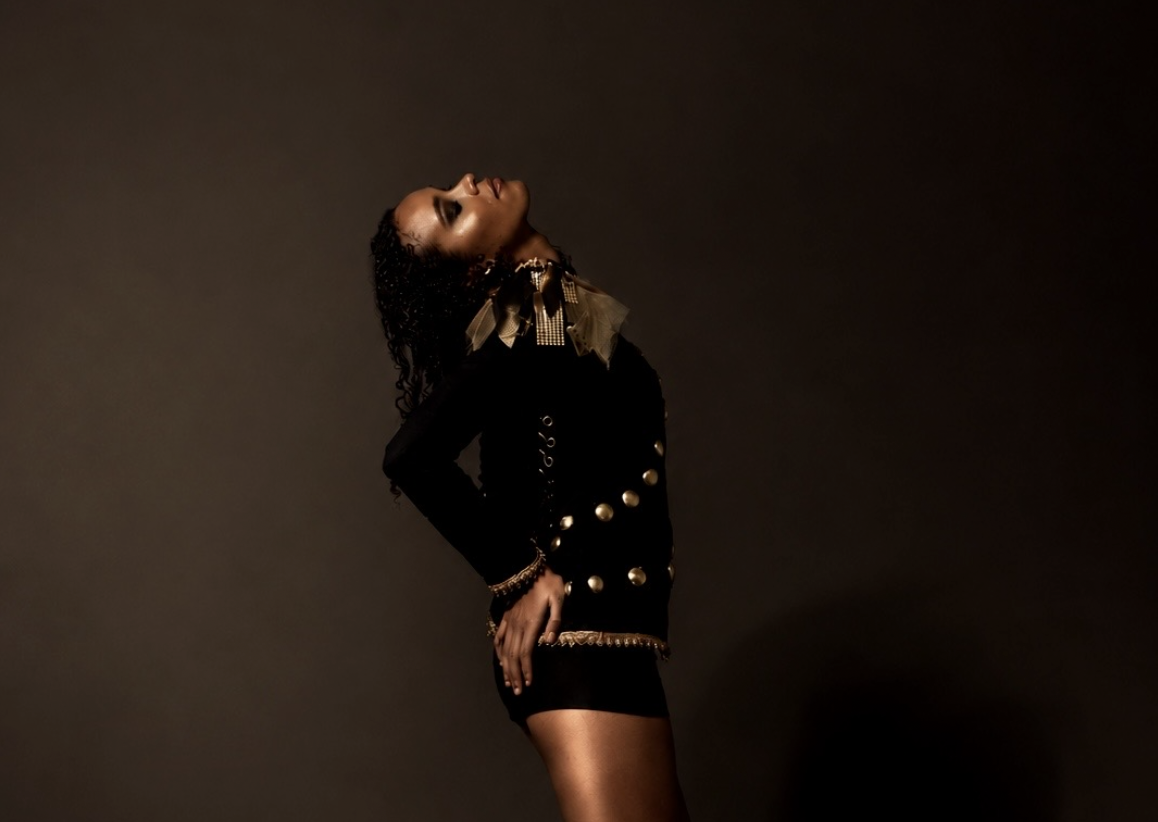
What does it mean to have authority? Does it mean that you’re unyielding, that you can command a situation to bend to your will, or have we simply mistaken the rewards of conformity as proof of agency and strength?
Historically speaking, fashion has long been the primary medium through which we communicate power. Authority is branded into buttons, cuffs and tailoring: from the grandiose garments worn by monarchs reigning over poverty-stricken lands to military uniforms that function as badges to which the general population must submit. Long before designer monograms and contemporary status symbols entered the fashion scene, clothing made hierarchy visible, transforming the human body into a tangible translation of institutional dominance.
However, I ask you to realize that the very garments that traditionally communicate power, by distinguishing their wearers through status and recognition, also demanded the submission of the wearers’ independence, making them slaves to the institution.
The military jacket speaks to this contradiction within its own seams. Every element of the jacket is constructed to present the wearer as the ultimate symbol of authority. The broad shoulders, tailored torso and high collar form an external skeleton around the human body, turning something that is inherently fluid into something that is constrained and controlled.
Yet, the same structure that grants you an imposing silhouette, making you seemingly uncontrollable, traps you within its confines. The body is made to live in a form that is predetermined, characterizing the jacket as more than just a uniform, but a role that makes promises it cannot keep. In this aspect, submitting to the appearance of power is to obey the structure that is giving it to you.
To call yourself truly free, you must question the conditions under which you are operating. After all, how free can you truly be if your freedom is something that another can give or take at will? There is no value in being unyielding and holding command if your own authority operates under conditions that are beyond your control. The human world functions within established hierarchies: climbing the corporate ladder, making your way through a system that gives you the illusion that you’re moving towards the top of the food chain. We have become so encapsulated by seeking authority and power within existing hierarchies that we don’t naturally gravitate towards defiance. In this sense, you should consider that seeking power and approval within established systems is the very act that gives another dominion over you.
Therein lies the distinction between authority and liberation: authority revolves around the power we are able to exercise within an established hierarchy, whereas freedom concerns our ability to challenge the hierarchy itself.
In this sense, defiance means recognizing that the rules governing our existence are not the limits imposed on our capability. It means refusing to confuse permission with possibility.
However, defiance is not an act without consequences: challenging authority means risking security, status and reassurance. To defy, one must willingly exist in a world that offers little security, pursue convictions that are not inherently recognized, and go down a path where success is not guaranteed.
We have been conditioned to believe that freedom is something that waits for us at the end of a climb, a privilege granted to us through hard work, and yet that privilege remains part of the same structure we have spent our lives climbing. You can stand above everyone else, with the ability to influence, shape and command, while still operating under the same constraints that put you there.
The fashion industry, with all its contradictions, allows us to examine this ideology with extraordinary precision: to defy is not to reject authority to satisfy some rebellious nature, but to recognize that no institution, however powerful and imposing, possesses a claim over who you are. You are one in eight billion. There is no second iteration of your existence, and no institution, system or hierarchy on this planet possesses the ability to reproduce the exact combination of convictions, contradictions and experiences that create individuality.
The most fundamental act of defiance is to recognize that the symbols, hierarchies and expectations through which we interpret the world are neither laws nor unshakable. They are conventions, and conventions can be broken. To be truly free is not to reach a position where no one can command you, but to possess the ability to question and subsequently go against the people who assume they can.
The greatest authority you will ever possess is the authority that determines who you are.